7 Tips on How to Choose Agricultural Packaging Bags

Time:2026-09-20 Author:Henry
0%

Choosing an agricultural packaging bag is a practical decision, not a simple purchasing task. Crop moisture, weight, temperature, pests, transport, and storage time all affect performance. A bag that protects dry grain may fail with fresh produce.

The Food and Agriculture Organization’s State of Food and Agriculture 2019 estimated that 14% of food is lost between harvest and wholesale. Packaging cannot solve every loss, but suitable materials can reduce crushing, moisture migration, contamination, and handling damage. The World Bank also reported that global waste could reach 3.40 billion tonnes annually by 2050 without stronger waste management systems. These figures make material efficiency important.

Andrew Morlet, Chief Executive of the Ellen MacArthur Foundation, states, “The circular economy is based on three principles: eliminate waste and pollution, circulate products and materials, and regenerate nature.” This principle should guide how to choose packaging bags for agriculture. However, recyclability alone is not enough. A lightweight bag that tears during loading creates waste and financial loss. A durable multilayer bag may protect crops better, but recycling can become more difficult.

This guide examines seven practical considerations, including crop characteristics, bag strength, ventilation, moisture barriers, closure systems, food-contact suitability, and end-of-life options. Small details matter. Check the stitching. Test the seal. Inspect the pallet edges.

Some recommendations may need adjustment. Local climate, machinery, supply chains, and recycling access differ widely. No bag is perfect. The better choice balances product protection, worker handling, environmental impact, and total cost throughout the bag’s service life.
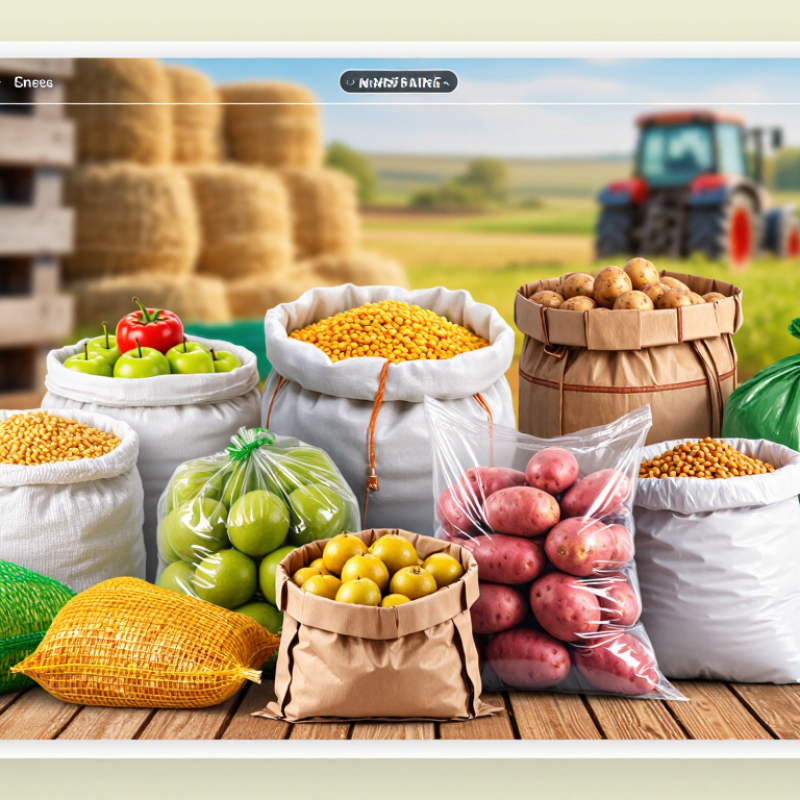
7 Tips on How to Choose Agricultural Packaging Bags

Define the Agricultural Product and Its Packaging Requirements

Before choosing agricultural packaging bags, define the product and its handling risks. Grain needs moisture protection and strong stacking performance. Fresh produce needs airflow, cushioning, and fast cooling. Seeds require stable humidity and protection from light. Powdered materials may need fine seals and dust control. The bag must fit the product, not merely the shipment.

FAO’s The State of Food and Agriculture 2019 estimated that 14% of food is lost between harvest and wholesale. Poor packaging can worsen this loss through torn seams, condensation, or pest exposure. UNEP’s Food Waste Index Report 2024 recorded 1.05 billion tonnes of food waste in 2022. Packaging cannot solve every cause, but suitable barriers can protect quality during storage and transport. Material selection should consider moisture vapor transmission, puncture resistance, load weight, and temperature changes.

Test the actual product inside the proposed bag. A woven structure may support heavy grain, while an inner liner may protect moisture-sensitive seeds. Ventilated bags can help with fresh crops, but excessive airflow may accelerate drying. Small details matter. Check drop tests, stacking trials, seal strength, and label readability. I have seen specifications chosen from habit rather than evidence. That is risky. Packaging trials should cover real warehouse humidity, truck vibration, and repeated handling. Requirements also need review against applicable food-contact, recycling, and agricultural transport rules.

Choose the Right Bag Material for Strength and Product Safety

Choosing agricultural packaging bags starts with material, not color or price.
In field trials, I have watched filled bags drag across concrete, rub against pallets, and sit in humid storage. Woven polypropylene often handles rough movement well because its interlaced strips resist tearing. For products needing a tighter moisture barrier, a polyethylene liner can reduce water vapor entry. Paper bags may suit dry goods, but wet floors and sharp grains expose their limits. Test the real load. Not a sample only.

Strength depends on more than fabric type. Check seam construction, handle design, gusset shape, and stitching density. A 25-kilogram bag can fail at the top seam while the body remains intact. Drop tests from the expected handling height reveal weak points quickly. Repeated lifting matters too. One careless assumption here can create waste. I would also inspect bags after heat exposure, compression, and vibration during transport. A bag that survives one drop may still split after a week of stacking.

Product safety requires clean, stable materials with no unwanted odor, dye transfer, or loose fibers. For food, seed, or animal feed, request documented material specifications and relevant food-contact test results. Match the packaging to oil, moisture, oxygen, and temperature sensitivity. Do not rely on a supplier’s general statement alone. Ask for batch records and retain samples. This takes time. Yet it makes complaints easier to investigate. Regional packaging and product-safety rules also vary, so technical review should happen before large-scale filling. Sometimes the practical choice is not the thickest bag, but the bag tested under actual farm conditions.

Match Bag Size, Capacity, and Closure Design to Handling Needs

7 Tips on How to Choose Agricultural Packaging Bags

Match Bag Size, Capacity, and Closure Design to Handling Needs

Bag selection should begin with the product, not the printed dimensions. Grain, seed, feed, and fresh produce have different bulk densities and movement patterns. A 25-kilogram bag may need more volume for lightweight material than for dense grain. Measure the filled product, then leave practical headspace for safe closing and stacking.

I have seen bags that matched the stated capacity but failed during loading. The problem was often overlooked expansion or uneven filling. Check the bag’s internal length, width, and usable height. Test it with real material, not only water or empty samples. A short trial can reveal bulging, poor balance, or unstable pallets.

Closure design must fit the handling routine. Sewn tops suit efficient, one-time closure after mechanical filling. Heat-sealed openings can improve moisture protection when the material is dry and compatible. Drawstrings or reusable closures work better when workers open the bag repeatedly. Keep the opening wide enough for clean filling and easy inspection. Too narrow is troublesome. A closure may also affect pouring speed and labor costs. Specifications can look precise, yet field conditions remain less predictable. Review filled bags after transport, stacking, and storage before approving a large order.

7 Tips on How to Choose Agricultural Packaging Bags

Match bag size, capacity, and closure design to handling needs. The chart shows representative commercial pack sizes commonly used for different agricultural products. Smaller capacities are generally more suitable for manual handling, while larger bags typically require mechanical lifting or palletized transport.

For seeds and potatoes, 25 kg bags can support easier manual handling. Wheat, rice, and fertilizer are often supplied in 25 kg or 50 kg formats, while animal feed commonly uses 25–40 kg bags. Choose sewn, heat-sealed, or valve closures according to filling speed, product protection, and the need for repeated opening.

Evaluate Moisture Control, Ventilation, and Storage Protection

Choosing agricultural packaging bags starts with the crop’s moisture behavior, not appearance. Fresh produce releases heat and water vapor after harvest. Dry grains need a different barrier. Check moisture content at packing, then review storage temperature and duration. A bag that feels strong may still trap condensation. That is where losses begin. I have seen sound produce soften because the inner surface stayed wet overnight.

For fresh vegetables, controlled ventilation helps remove field heat and reduce fogging. Perforations should match crop size, respiration rate, and transport distance. Too many openings can cause wilting. Too few can create mold-friendly pockets.

Ask for measurable airflow or moisture-vapor data, rather than vague claims. Test a small batch under real conditions. Weigh sample packs before and after storage. Inspect corners, seams, and inner film for droplets. This is practical evidence.

Storage protection also depends on stacking and handling. Select bags with tear-resistant seams, stable dimensions, and surfaces that tolerate dust. Keep filled bags off damp floors and leave air space between stacks. Sunlight and temperature swings deserve attention, even in temporary sheds. A bag cannot correct poor warehouse practice.

Record rejected bags and damaged corners, because small failures reveal design weaknesses. I once assumed thicker material always meant better protection. It did not. In one review, thinner bags with balanced vents performed better than thicker, sealed ones.

Compare Durability, Sustainability, Cost, and Supplier Reliability

Choosing agricultural packaging bags starts with the crop, handling route, and storage climate. A dry grain bag needs different protection than a fertilizer sack. Ask for tensile, tear, puncture, seam, and drop-test data. Do not trust thickness alone. A thin, well-designed laminate can outperform a heavier, weak bag. Check UV resistance when filled bags remain outdoors. Inspect ten samples, not one. Small flaws matter.

Sustainability deserves measurable evidence. Compare recycled content, material weight, ink coverage, and the local recovery route. A recyclable bag is not sustainable if no facility accepts it. Request clear material specifications and disposal guidance. Compostable claims require particular conditions. They are often misunderstood. Cost should include filling speed, rejected bags, transport volume, storage losses, and end-of-life handling. A cheaper unit price may become expensive after one torn pallet. Run a small pilot under real humidity and stacking pressure. My own evaluations have sometimes overvalued laboratory results. Field conditions corrected that assumption.

Supplier reliability is judged through records, not confident promises. Review production capacity, quality controls, batch traceability, inspection reports, and backup plans for raw-material delays. Confirm lead times in writing, including peak-season capacity. Ask how complaints are investigated and corrected. Request samples from normal production, not only showcase samples. Evaluate strength, seams, UV protection, sustainability evidence, total cost, delivery performance, and technical support. Still, leave room for doubt. Agricultural seasons rarely behave perfectly.

7 Tips on How to Choose Agricultural Packaging Bags - Compare Durability, Sustainability, Cost, and Supplier Reliability
Selection Tip What to Compare Woven Polypropylene (PP) PE Film Bag Multiwall Paper Bag Jute Bag FIBC Bulk Bag Practical Verification
1Match the bag to the load Product weight, density, filling method, stacking height, and handling equipment. Good for 10–50 kg loads
Commonly used for grain, seed, feed, and fertilizer.
Good for light to medium loads
Best when moisture containment and low package weight are priorities.
Good for approximately 5–25 kg loads
Suitable for dry powders, flour, seed, and animal feed.
Usually suitable for 5–50 kg loads
Works well for products where breathability and natural appearance matter.
Typically rated for 500–2,000 kg
Requires compatible lifting loops and certified safe working load.
Confirm the bag's rated capacity, safety factor, seam design, and pallet pattern before placing an order.
2Check mechanical durability Tensile strength, tear resistance, puncture resistance, seam strength, and drop performance. High
Woven construction provides strong tear and abrasion resistance.
Low to high, depending on film thickness
Thicker or co-extruded films resist puncture better.
Moderate
Paper strength decreases when exposed to water or rough handling.
Moderate
Natural fibers can be affected by abrasion, moisture, and inconsistent fiber quality.
High when correctly specified
Strength depends on fabric weight, construction, and lifting-loop design.
Request production samples and perform filled-bag drop, seam, stacking, and handling tests under actual operating conditions.
3Evaluate moisture and UV protection Water-vapor barrier, rain resistance, condensation control, and storage exposure. Good with a PE liner or coating
Uncoated woven PP is not a complete moisture barrier.
Very good
Low-density and high-density PE films provide effective moisture protection.
Limited unless coated or lined
Paper can absorb moisture and lose strength.
Limited
Natural fibers can absorb moisture and may require treatment or an inner liner.
Good with UV stabilization and liner options
Unprotected fabric may degrade during prolonged sunlight exposure.
Specify moisture-barrier requirements, UV exposure duration, liner thickness, and storage conditions in the purchase specification.
4Compare sustainability Material weight, recycled content, recyclability, reusability, and end-of-life infrastructure. Good potential
Lightweight, reusable, and generally recyclable where PP collection exists.
Good potential
Lightweight and recyclable, but multilayer films and contamination can reduce recovery.
Good for fiber recovery
Paper is commonly recyclable when clean and dry; coatings and liners may complicate recovery.
Renewable and biodegradable
Performance and disposal depend on moisture, contamination, and local composting conditions.
Good when reused or recycled
Reuse requires inspection, cleaning, traceability, and compliance with product-contact rules.
Ask for material composition, recycled-content percentage, recyclability guidance, and a documented end-of-life route.
5Calculate total cost Purchase price, liners, printing, transport volume, handling losses, and reuse potential. Low to moderate
Usually cost-efficient for standard 25–50 kg agricultural products.
Low for lightweight packaging
Cost rises with thicker films, multilayer structures, and special closures.
Moderate
May require coatings, liners, or stronger paper grades for demanding products.
Moderate to high
Material and labor costs can be higher than mass-produced plastic options.
Low cost per kilogram transported
Large capacity can reduce handling and secondary-packaging costs.
Compare cost per packed kilogram, not only cost per bag, and include transport, storage, failure rate, and disposal expenses.
6Review product protection and compliance Food-contact suitability, contamination control, odor transfer, print quality, and traceability. Suitable with approved materials
Can be laminated, lined, and printed for product identification.
Strong barrier options
Useful for moisture-sensitive products when the film structure is correctly selected.
Good printability
Paper provides a large printable surface but needs protection from moisture.
Requires careful specification
Natural fibers may contain dust, odor, or variable impurities without proper processing.
Suitable with approved fabric and liner
Important for bulk food, seed, and feed applications.
Request declarations of conformity, migration information where relevant, batch traceability, and certificates for the intended application.
7Test supplier reliability Quality consistency, lead time, minimum order quantity, technical support, and corrective-action capability. ★★★★★
Widely available with many construction options.
★★★★★
Often available in customized thicknesses, sizes, and barrier structures.
★★★★☆
Common formats are readily available; special coatings may extend lead time.
★★★☆☆
Supply consistency can vary with fiber sourcing and seasonal availability.
★★★★☆
Reliable supply depends on testing, inspection, and control of safety-critical components.
Check sample approval records, on-time delivery history, batch inspection reports, capacity, backup production plans, and written specifications.
Typical material indicators Useful reference values for initial comparison only. PP density is approximately 0.90 g/cm³; woven fabric commonly ranges from about 60–140 g/m². PE density is commonly about 0.91–0.96 g/cm³; film thickness often ranges from approximately 40–200 micrometres. Paper basis weight commonly ranges from approximately 70–110 g/m² per ply; multiwall construction uses several plies. Jute fiber density is approximately 1.3–1.5 g/cm³; fabric weight varies considerably by weave and grade. FIBC fabric commonly ranges from approximately 120–240 g/m²; the safe working load must be specified by design. Use these values to create a shortlist, then approve the final design through filled-product testing and documented specifications.

Note: Performance and cost vary with bag size, construction, coatings, liners, printing, filling equipment, transport distance, order volume, and local recycling infrastructure. The listed ranges are general industry reference values rather than guaranteed product specifications.

FAQS

How should agricultural packaging bags match the product?

Match the bag to the product’s handling risks. Grain needs moisture protection and strong stacking support. Fresh produce needs airflow and cushioning. Seeds need stable humidity and light protection. Powdered materials need fine seals and dust control.

Why is moisture control important during storage?

Moisture can cause condensation, softening, mold, or quality loss. Check moisture content before packing. Review storage temperature and duration. A strong bag may still trap water. Inspect the inner surface for droplets.

How much ventilation does fresh produce need?

Ventilation should match crop size, respiration rate, and transport distance. Too many openings may cause wilting. Too few may create damp pockets. Test airflow with a small batch. Real conditions matter more than appearance.

What tests should be completed before selecting a bag?

Test drop resistance, stacking performance, seal strength, and label readability. Include warehouse humidity and truck vibration. Repeat handling can reveal weak seams. Do not rely on habit alone. Evidence may change the choice.

Are thicker bags always better?

Not necessarily. Thicker material may trap condensation or reduce useful airflow. Thinner bags can perform better when vents and barriers are balanced. This needs testing. Assumptions can fail.

How can bags protect seeds during storage?

Seeds need stable humidity and protection from light. Consider an inner liner when moisture sensitivity is high. Check seals carefully. Store filled bags away from damp floors and strong temperature swings.

What features help bags survive stacking and handling?

Choose tear-resistant seams and stable dimensions. The surface should tolerate dust and repeated movement. Review damaged corners and rejected bags. Small failures often expose larger design weaknesses.

What warehouse practices support packaging performance?

Keep filled bags off damp floors. Leave air space between stacks. Limit harsh sunlight and temperature swings. Packaging cannot repair poor storage practices. Some improvement is always possible. Review conditions regularly.

Conclusion

Choosing the right agricultural packaging bag begins with understanding the product, its weight, shape, sensitivity, and expected storage conditions. This guide explains how to choose packaging bags for agriculture by matching the bag material to the product’s strength, safety, and hygiene requirements. It also highlights the importance of selecting an appropriate size, capacity, and closure system for filling, transportation, stacking, and everyday handling. A well-designed bag should protect its contents while remaining practical and easy to use.

Moisture control and ventilation are also essential, especially for products that may spoil, absorb humidity, or require airflow. The guide further encourages readers to compare durability, sustainability, total cost, and supplier reliability before making a final decision. By considering product requirements, material performance, bag design, storage protection, and long-term value together, agricultural businesses can choose packaging that improves product safety, reduces waste, supports efficient logistics, and performs reliably throughout storage and distribution.

Henry

Henry

Henry is a dedicated marketing professional with a profound expertise in the company's offerings. With years of experience in the industry, he possesses an impressive understanding of the market dynamics and consumer behaviors that drive success. Henry is committed to sharing his insights through......