Kraft paper bags are widely used for their eco-friendliness and versatility. However, a common concern arises when considering their durability. Many users often ask, "why do kraft paper bags tear easily?" This question reflects a genuine interest in understanding the material properties that contribute to their vulnerability.
Kraft paper, known for its strength, can still be prone to tearing under certain conditions. Factors such as moisture, weight overload, and the type of kraft paper used can affect its integrity. For instance, wet conditions significantly weaken the fibers, leading to tears. Moreover, precise crafting and thickness variations play a role in performance.
Acknowledging these limitations is crucial for consumers and manufacturers alike. By exploring practical solutions, such as reinforcing seams or choosing thicker materials, we can help mitigate the issue. Ultimately, it’s important to recognize that improving the durability of kraft paper bags requires a blend of material knowledge and design innovation.
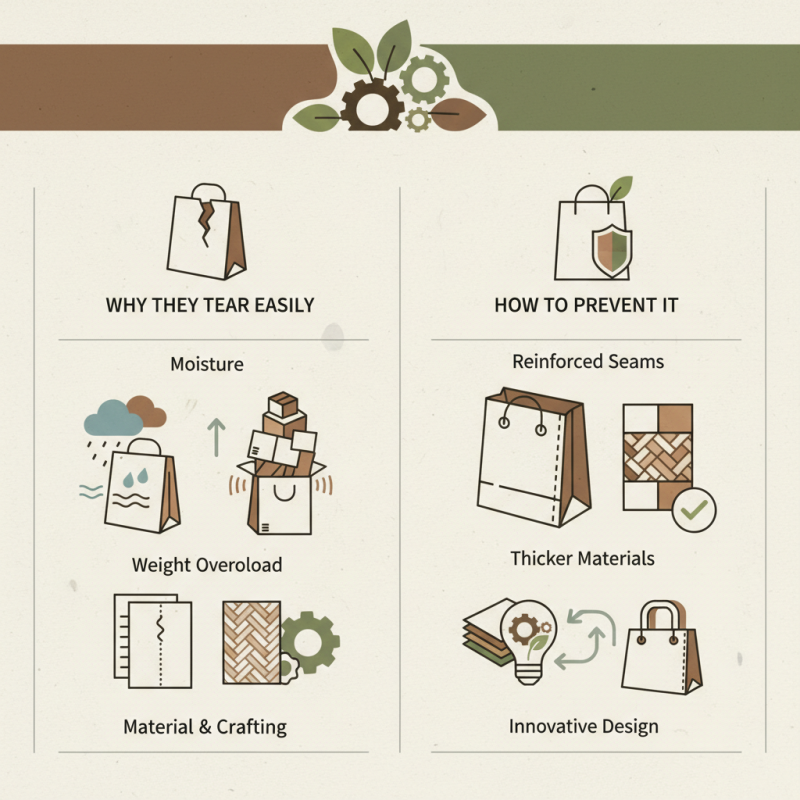
Understanding the Composition of Kraft Paper Bags
Kraft paper bags are popular due to their eco-friendliness and biodegradability. However, many users notice they tear easily. Understanding the composition of kraft paper helps explain this issue.
Kraft paper is made from wood pulp using the kraft process, which preserves the wood fibers. This results in strong, long fibers that provide durability. However, the paper's thickness and quality can vary significantly. A study by the Paper & Packaging Board reveals that the strength of kraft paper depends on its basis weight, typically ranging from 30 to 60 pounds per 3,000 square feet. Lower basis weight bags are less resilient and more prone to tearing, especially when filled with heavy items.
Humidity and storage conditions also affect kraft paper bags. When exposed to moisture, the fibers can swell, causing weakness. A report from the American Society for Testing and Materials highlights that proper storage can reduce this risk. Additionally, the manufacturing quality impacts bag performance, as inconsistent fiber lengths can lead to weak spots. Consumers should consider these factors when selecting kraft paper bags.
Common Reasons for Kraft Paper Bag Tears
Kraft paper bags are popular for their eco-friendliness. However, they often tear easily, causing inconvenience. Understanding why this happens can help users choose better packaging solutions.
A primary reason for tears is inadequate fiber quality. Low-quality kraft paper lacks strength and durability. This leads to rips during everyday use. Another issue is moisture. Kraft paper can weaken when it gets damp. Carrying wet items can increase the likelihood of tears. Additionally, sharp edges or heavy loads can also stress the bag, causing it to fail.
To prevent these issues, selecting higher-quality kraft paper is essential. Look for reinforced seams or double-layered options. Using the bag properly also helps. Avoid overloading and limit contact with moisture. Simple precautions can significantly enhance the bag's longevity. Striving for better usage habits is crucial for ensuring the bags perform well.
Factors Affecting the Durability of Kraft Paper Bags
Kraft paper bags are popular for their eco-friendliness. However, many users encounter issues with tearing. Several factors contribute to this problem. The weight of the items placed inside is a primary concern. If a bag carries too much weight, it can easily rip. This happens more often with thinner kraft paper grades.
The quality of the paper itself plays a vital role. Some kraft papers are mixed with low-quality fibers, reducing their strength. Inadequate processing can also make the paper less durable. Humidity is another factor affecting the bag's endurance. When wet, kraft paper loses its structural integrity. This causes potential mishaps while carrying goods.
Not all kraft bags are created equal. Users often overlook the importance of bag thickness. A thicker bag can manage weight better and resist tearing. Yet, cost may lead some manufacturers to choose cheaper, thinner alternatives. It’s worth considering that not every bag is suitable for every task. Picking the right type is crucial for a successful carrying experience.
Tips for Choosing High-Quality Kraft Paper Bags
Choosing high-quality Kraft paper bags is essential for durability and performance. When selecting these bags, look for a thicker paper weight. Heavier paper provides increased strength, which helps resist tearing. Aim for bags with a weight of at least 70 gsm for better resilience.
Pay attention to the construction of the bag. Handles and seams should be reinforced. Poorly attached handles can lead to failure when lifting heavy items. Ensure that the bags are folded and glued properly. This detail makes a significant difference in overall stability.
Testing the bag is also a critical step. Load it with items similar to what you plan to use it for. This practice can reveal any weaknesses beforehand. If the bag feels flimsy or unsturdy, it may not meet your needs. Investing time in selection ensures you avoid the frustration of torn bags later.
Durability Comparison of Different Kraft Paper Bags
This bar chart illustrates the tear resistance of various Kraft paper bags based on their weight. As the weight of the kraft paper increases, the tear resistance also increases, indicating that higher quality paper bags are less likely to tear easily.
Preventive Measures to Enhance Kraft Paper Bag Strength
Kraft paper bags are valued for their sustainability, but they can tear easily. To improve their strength, manufacturers must consider several key factors. The fiber quality in the pulp is critical. Higher quality fibers contribute to better tensile strength. Interestingly, studies show that bags made from 100% virgin fibers can outperform recycled paper versions, reducing the likelihood of tears during use.
Moisture resistance is another vital aspect. Kraft paper absorbs moisture, which weakens its structure. Adding coatings or treatments can prevent this issue. Research indicates that even a thin polyethylene layer can significantly increase tear resistance. A study from the American Forest and Paper Association found that moisture-treated kraft bags showed a 40% increase in durability.
Lastly, the bag’s design should not be overlooked. Reinforced seams and proper folding techniques can mitigate tearing. Using a gusset design allows the bag to hold more weight while distributing stress evenly. Regular testing of prototypes can highlight weaknesses early in the process. This kind of ongoing evaluation helps manufacturers refine their products continuously, increasing reliability over time. Enhanced strength in kraft paper bags might require effort, but the benefits are clear.
Why Do Kraft Paper Bags Tear Easily and How to Prevent It? - Preventive Measures to Enhance Kraft Paper Bag Strength
| Factors Affecting Strength |
Impact Level (1-5) |
Preventive Measures |
Effectiveness (1-5) |
| Material Quality |
5 |
Use high-grade kraft paper |
5 |
| Thickness |
4 |
Increase paper thickness |
4 |
| Moisture Exposure |
5 |
Use waterproofing treatments |
4 |
| Weight Capacity |
4 |
Test and adjust load limits |
5 |
| Seam Strength |
5 |
Use reinforced seams |
5 |
Conclusion
Kraft paper bags are widely appreciated for their eco-friendliness, but many users have wondered, "why do kraft paper bags tear easily?" The composition of these bags plays a significant role in their vulnerability to tearing. Factors such as the quality of the paper, thickness, and environmental conditions like humidity can greatly impact their durability. Common reasons for tears include overloading the bags beyond their weight capacity, exposure to moisture, and general wear and tear.
To enhance the strength of kraft paper bags, choosing high-quality products is essential. Look for bags that are specifically designed for strength, featuring reinforced seams and larger dimensions to reduce stress points. Additionally, proper handling and storage practices can prevent damage and prolong the bag's lifespan. By understanding the factors affecting kraft paper bag durability and adopting preventive measures, users can minimize the risk of tears and make better use of this sustainable packaging option.

 ChicBeauty Bag