Can you recycle plastic paper bags? The honest answer depends on their construction, local facilities, and collection rules. A plain paper bag usually enters paper recycling. However, a bag with a glossy plastic coating, inner film, handles, or bonded layers may require specialized processing. These materials look simple in your hand, yet sorting machines often treat them as contamination.
The U.S. Environmental Protection Agency reported that only about 10.2% of plastic bags, sacks, and wraps were recycled in 2018. The OECD’s Global Plastics Outlook found that approximately 9% of global plastic waste was recycled in 2019. Those figures expose a difficult reality: recyclable in theory does not mean accepted in practice. Check the label, tear the bag carefully, and contact your local program before placing it in a curbside bin. Never assume a clean appearance guarantees recyclability.
Jan Dell, a chemical engineer and founder of The Last Beach Cleanup, has said, “Recycling is not a solution to plastic pollution.” Her statement adds useful caution to this discussion. Recycling still matters, but reducing mixed-material packaging often matters more. A crinkled lining, a plastic window, or a thin waterproof coating can change the correct disposal route. The answer may be inconvenient. It may also vary by neighborhood. This guide examines how to identify these bags, where recycling options exist, and why some apparently recyclable packaging is rejected. Some details remain uncertain, because packaging labels and local guidance are not always consistent.
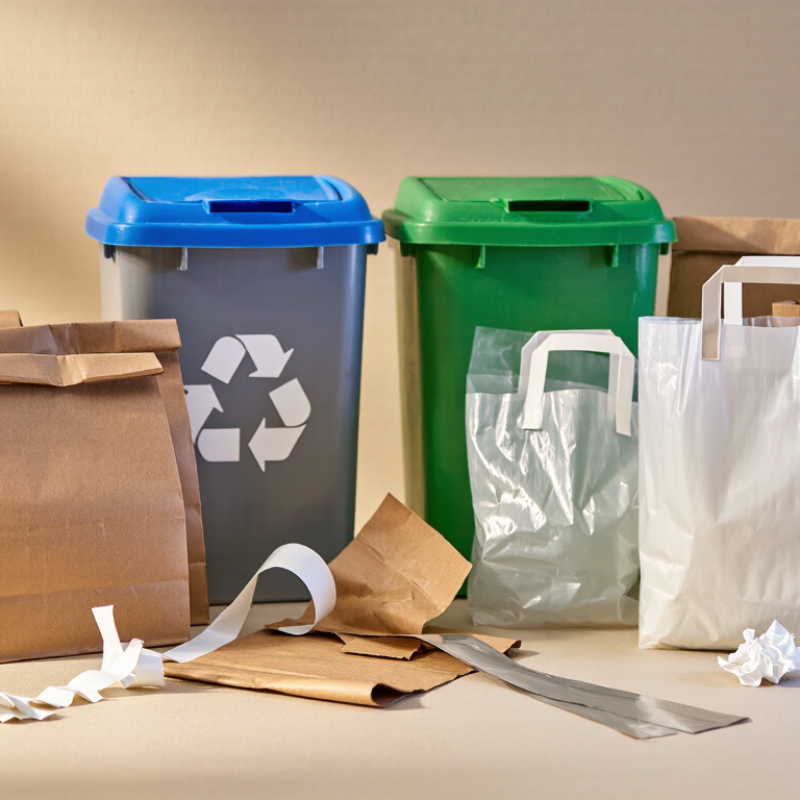
“Plastic paper bag” is not a precise technical term. It usually describes a paper bag with a thin plastic film, coating, or inner liner. The paper provides stiffness and printability. The plastic layer improves resistance to moisture, grease, and tearing.
Manufacturing begins with kraft paper made from wood fibre. The paper is dried, cut, and formed into a tube or flat sheet. A plastic film, often polyethylene, may then be laminated onto its surface. In another process, molten plastic is extrusion-coated directly onto the paper. Heat seals the edges and closes the base. Some bags also include adhesives, inks, handles, or multiple layers.
That structure creates a recycling problem. Paper mills need fibres to separate in water. Plastic films can remain as rejects or contaminate the recovered pulp. The OECD’s Global Plastics Outlook reported 353 million tonnes of plastic waste in 2019, with only 9% recycled. By contrast, CEPI’s 2023 monitoring report placed Europe’s paper recycling rate at about 82%. These figures are not directly comparable, but they show why material design matters.
A bag with a very light coating may enter a paper stream in some regions. A heavily laminated bag may require a specialist facility. Local rules decide. A practical check is simple: tear the bag and inspect the cross-section. If a stretchy film separates from the paper, ordinary paper recycling may reject it. This test is imperfect, though. Moisture barriers can be difficult to see, and recycling guidance changes between facilities.
Can You Recycle Plastic Paper Bags? What You Need to Know
A “plastic paper bag” may contain paper, plastic film, or both materials. Its appearance can be misleading. Look closely at the surface and seams. Paper feels fibrous and tears with rough, uneven edges. Plastic feels smooth, stretches slightly, and makes a sharper crinkling sound.
Hold the bag near a window. A glossy inner layer often signals plastic coating. Scrape a hidden corner gently with your fingernail. If a thin film separates from the paper, the bag is probably laminated. Some bags also contain a plastic handle, adhesive strip, or waterproof lining. These small parts can change how a recycling facility handles the item.
Keep it dry and empty. Do not rely only on a home test. A wet bag may appear paper-based while its coating remains plastic. Burning or cutting the bag is unsafe and unnecessary. Check your local recycling instructions, because accepted materials vary by facility. Many collection systems reject mixed-material packaging unless workers can separate it efficiently.
My own sorting is not always perfect. A bag can look recyclable and still belong in general waste. That feels wasteful, but contamination can harm an entire batch. When uncertain, I record the material clues and contact the local facility. A clear answer from the actual processor is more reliable than a recycling symbol alone.
| Bag Material or Construction | How to Identify It | Common Markings | Typical Recyclability | Recommended Disposal Action | Important Consideration |
|---|---|---|---|---|---|
| Plain paper | Fibrous surface, tears like paper, becomes soft when wet, and usually has no glossy plastic film. | Paper symbol, paper grade, or no coating listed. | Often recyclable | Place it with paper recycling if it is clean and dry, according to local collection rules. | Remove food residue, wet sections, stickers, and non-paper handles when required. |
| Paper with a polyethylene coating | Paper fibers are visible, but one or both sides feel smooth, sealed, or slightly plastic-like. | May state “PE-coated,” “plastic-lined,” or list polyethylene. | Rules vary | Check with the local recycling program; do not assume it belongs in ordinary paper recycling. | The bonded plastic layer can interfere with paper pulping and fiber recovery. |
| Paper laminated with plastic film | Multiple layers are visible at a torn edge; the bag is difficult to tear and may feel stiff or glossy. | May list “laminated,” “plastic film,” or a resin such as PE or PP. | Usually limited | Follow local guidance; if no suitable collection exists, place it in general waste rather than paper recycling. | Mixed-material layers are difficult to separate in standard recycling facilities. |
| Low-density polyethylene film (LDPE) | Thin, flexible, smooth plastic that stretches or crinkles; paper fibers are absent. | Resin identification code 4 or “LDPE.” | Often not curbside | Use a designated plastic-film drop-off only where accepted; otherwise use general waste. | Plastic film can wrap around sorting equipment and is commonly collected separately. |
| High-density polyethylene film (HDPE) | Lightweight plastic with a smooth or slightly cloudy appearance; it is less stretchy than LDPE. | Resin identification code 2 or “HDPE.” | Program dependent | Check whether local services accept HDPE bags or use a designated film collection point. | A resin code identifies the plastic type; it does not guarantee local recyclability. |
| Polypropylene film (PP) | Thin, durable, and often crisp or slightly cloudy; commonly used for woven or laminated bag components. | Resin identification code 5 or “PP.” | Limited in many areas | Follow local instructions for flexible PP; do not place it in a paper stream. | Flexible polypropylene is handled differently from rigid polypropylene containers. |
| Paper and aluminum laminate | Reflective silver layer may be visible inside or at a torn edge; the bag is difficult to separate by hand. | May state “foil-lined,” “aluminum laminate,” or “multilayer packaging.” | Rarely accepted | Use a specialized collection program if one exists; otherwise place it in general waste. | Paper, plastic, and metal layers are bonded together and are not normally separated in standard facilities. |
| Compostable or biodegradable plastic | May resemble ordinary plastic but is labeled with compostability or biodegradability instructions. | “Compostable,” “industrial composting,” or a certified composting label. | Not recyclable with ordinary plastic | Use an accepted industrial composting service only when the label and local program permit it. | Compostable plastics can contaminate conventional plastic recycling and usually need controlled composting conditions. |
| Paper bag with fabric, cotton, or rope handles | The main body is paper, but handles contain fibers or materials that do not belong in the paper stream. | Usually no specific material code; inspect the handle and attachment points. | Paper body may be recyclable | Remove handles and non-paper attachments if local instructions require it, then recycle the clean paper body. | Metal eyelets, plastic grips, tape, and heavy adhesive may need separate disposal. |
| Contaminated paper or plastic bag | Contains grease, food, liquid, chemical residue, or significant moisture. | No special marking is required. | Usually not accepted | Dispose of it as general waste unless a local program specifically accepts the contaminated material. | Contamination can lower the quality of recovered paper or plastic and may cause entire loads to be rejected. |
Recycling reminder: Packaging symbols and resin identification codes describe the material, but they do not guarantee acceptance in a particular area. Empty and clean the bag, separate removable components where appropriate, and confirm the requirements of the local recycling or waste authority before disposal.
Can You Recycle Plastic Paper Bags? What You Need to Know
Curbside recycling programs usually cannot process plastic-paper bags as one item. These bags often combine paper fibers with a thin plastic lining. Machines cannot easily separate those layers. A bag may look like paper, but its inner surface can change the recycling result.
I once assumed a clean snack bag belonged with paper recycling. That assumption was wrong. Many curbside programs accept clean, dry paper bags, but reject coated or laminated versions. Plastic shopping bags create another problem. They can wrap around sorting equipment and cause stoppages. Never place them loose in a recycling cart. Some communities collect them through separate drop-off points, but local rules differ.
Check your waste authority’s accepted-materials list before sorting. Look for terms such as “lined,” “coated,” “laminated,” or “multi-layer.” A greasy bag, wet bag, or bag with food crumbs usually belongs in general waste. Remove receipts, metal handles, and leftover contents when the program allows the bag itself. Do not tear a plastic-lined bag apart at home. The pieces may still be unsuitable for curbside processing. Recycling guidance can feel inconsistent, and sometimes it is. Programs use different equipment, contracts, and end markets. A quick local check is more reliable than the recycling symbol printed on the package.
Before sorting, identify the bag. If it feels like paper but has a glossy, sealed, or waterproof layer, it may be laminated. That combination often needs different equipment. Empty every pocket and remove food, receipts, tape, stickers, and loose handles. Shake out crumbs. Wipe it only when needed, then let it dry completely. Moisture can reduce paper quality and contaminate other materials. Do not tear a composite bag apart at home.
For a plain paper bag, flatten it and place it with accepted paper. For a plastic film bag, keep it clean, dry, and loose. Never place film inside another bag. Many collection systems require separate drop-off points for film. Composite paper-plastic bags are the difficult case. Check the local facility’s accepted-materials list before choosing a bin. Rules vary by facility. The U.S. Environmental Protection Agency reported a 68.2% recycling rate for paper and paperboard in 2018, while plastics overall reached only 8.7%. These national figures do not confirm local acceptance.
The OECD estimated that only 9% of global plastic waste was recycled in 2019. Careful preparation matters, but it cannot make an unsuitable bag recyclable. Look for a resin code only as a clue; it is not a recycling promise. Remove rigid clips or metal pieces when local instructions require it. Keep accepted bags dry during transport. A clean-looking bag can still be rejected. That is the part worth reconsidering: household convenience may create extra sorting work at the facility. Check twice.
Plastic-paper bags may contain multiple materials that recycling facilities cannot process together. Before recycling, empty the bag, remove food residue, separate paper from plastic whenever possible, and check your local recycling rules. Do not place plastic film in a paper recycling bin unless your community specifically accepts it.
Data source: U.S. Environmental Protection Agency, “Facts and Figures about Materials, Wastes and Recycling,” 2018.
Plastic-paper bags often look recyclable, yet their mixed layers can complicate sorting and pulping. The OECD’s Global Plastics Outlook reports that only 9% of plastic waste was recycled globally in 2019. This makes material reduction more practical than relying on recycling alone.
Reusable bags offer a stronger replacement when used repeatedly. A durable woven bag can carry groceries, clothing, or takeaway containers for years. The United Nations Environment Programme estimates that better reuse, recycling, and material reduction could cut plastic pollution by 80% by 2040. However, reuse only works with regular washing and many trips. One forgotten bag defeats much of its purpose.
For single-use needs, uncoated paper bags are easier for many paper-recycling systems to process. Look for clear fiber content and avoid glossy films, foil layers, and heavy coatings. Compostable bags may suit food-waste collection, but only where accepted industrial composting exists. They can contaminate paper recycling when placed in the wrong bin. The European Bioplastics market data shows that compostable materials remain a small share of global plastics production, so local facilities still matter.
My own shopping habits expose an uncomfortable gap. I sometimes choose paper, then accept extra packaging inside it. Better design matters, but behavior matters too. Refill stations, deposit systems, and simple reusable containers can reduce bag demand before disposal becomes the problem. Practical, imperfect choices beat attractive materials without a recovery system.
Paper feels fibrous and tears unevenly. Plastic feels smooth, stretches slightly, and makes a sharper crinkling sound.
It often suggests a plastic coating or lining. Hold the bag near a window and inspect its layers.
Gently scrape a hidden corner with your fingernail. Stop if a thin film separates from the paper. Do not burn or cut it.
Usually, no. Paper fibers and plastic layers are difficult for sorting machines to separate efficiently.
Keep it empty, clean, and dry. Grease, moisture, and food crumbs can contaminate other materials.
Not unless local instructions specifically allow them. Words like “coated,” “lined,” and “laminated” deserve caution.
No. They may wrap around sorting equipment and cause stoppages. Some areas provide separate drop-off collection.
Follow the local waste facility’s instructions. The actual processor understands its equipment and accepted materials better.
Record clues such as a shiny lining, plastic handle, or adhesive strip. Contact the local facility before sorting it.
No. I once mistook a clean snack bag for paper recycling. Uncertainty happens, but contamination can damage an entire batch.
Plastic paper bags are made by combining paper with a plastic coating, lining, or handle, which gives them strength, moisture resistance, and a more flexible design. Because these bags contain multiple materials, the first step is to identify whether the paper and plastic can be separated. Look for visible layers, a glossy or waterproof surface, and labels that indicate the material composition. If you are wondering, “can you recycle plastic paper bags,” the answer depends on your local recycling program. Many curbside services do not accept them because mixed materials are difficult to process, while some specialized facilities may handle them separately.
Before recycling, empty the bag, remove food residue, tape, and non-recyclable attachments, and keep the paper dry. Do not place it in a recycling bin unless your local guidelines specifically allow it. Reusable cloth bags, recycled-paper bags, and durable containers can provide more sustainable alternatives. Choosing products with simple, single-material packaging also makes recycling easier and can help reduce unnecessary waste.
