When buyers ask, “what are the safety factors for ton bags,” they usually mean more than a printed load rating. A ton bag, often called a jumbo bag or FIBC, must safely contain heavy materials during filling, lifting, transport, and discharge. In China, responsible manufacturers normally assess the bag’s safe working load, design factor, fabric strength, seam performance, and lifting-loop capacity. The required rating may be 5:1 or 6:1, depending on the bag design, application, and applicable technical standard. It should never be assumed from appearance alone.
A reliable evaluation begins with traceable polypropylene fabric and controlled production records. Inspectors should review tensile-test results, seam tests, drop tests, and top-lift tests. The loops should sit evenly, without loose stitching or damaged edges. A loaded bag should remain stable on a pallet, with no sharp bulges or distorted corners. Moisture, ultraviolet exposure, sharp filling materials, and repeated handling can reduce performance. Conductive or antistatic designs may also be necessary when static discharge creates a workplace risk. The correct choice depends on the material and working environment.
Ask for a specification sheet, batch information, and recent laboratory reports. Independent inspection can add confidence before shipment. Photos help, but they do not replace testing. This is where some purchasing decisions become weak. A low price may hide thinner fabric, rushed stitching, or unclear testing. I have seen specifications look complete while omitting lifting conditions. That omission matters. Safety depends on the complete system, not one attractive number. Careful buyers should confirm filling weight, lifting method, discharge design, storage conditions, and inspection procedures before approving China top ton bags.
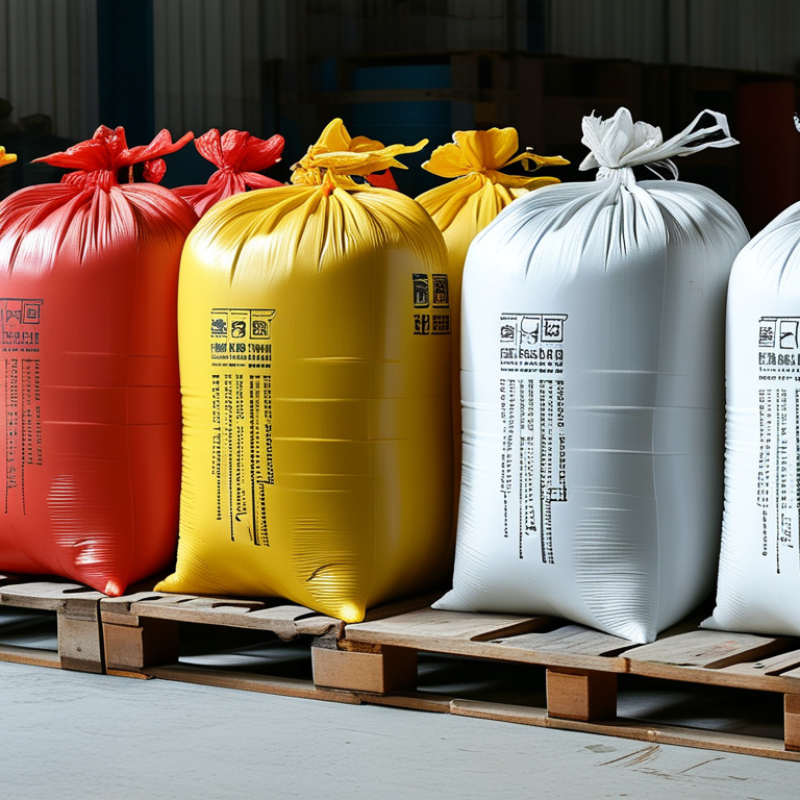
Material quality determines how safely a top ton bag handles bulk loads. Most reliable bags use high-strength polypropylene woven into consistent, tightly packed fabric. Uneven weaving, brittle threads, or excessive recycled content can reduce tear resistance. A coated inner surface may improve moisture protection, but it should not replace proper storage. Keep bags away from sharp edges, prolonged sunlight, and standing water.
Load-bearing performance depends on the safe working load, safety factor, seam strength, and lifting design. A bag rated for 1,000 kilograms should not be treated as suitable for every material. Powder density, filling speed, discharge impact, and repeated handling can change the real stress. Testing should include fabric tensile strength, top loop capacity, seam durability, and deformation under load. Standards and test reports must be checked carefully, because documents alone cannot reveal every production weakness. A clean-looking bag may still contain inconsistent stitching.
Tips: Check the safe working load and safety factor before filling. Inspect loops and seams for loose threads, cuts, or distortion. Use all lifting loops evenly. Do not drag a filled bag across concrete. Store bags under cover, with stable stacking and clear handling instructions. A small inspection can prevent a large failure. Still, inspection methods vary, and relying only on visual checks is an avoidable mistake.
What Are the Safety Factors for China Top Ton Bags?
Bag design directly affects lifting and handling safety. The UK Health and Safety Executive’s Work-related Ill Health and Injury Statistics 2023/24 recorded about 511,000 workers with work-related musculoskeletal disorders. FIBC design cannot remove every risk, but it can reduce awkward lifting, sudden shifting, and poor load control.
Strong lifting loops should match the bag’s safe working load and lifting method. Four separate loops help keep a one-ton bag balanced during crane or forklift handling. Reinforced corner seams matter. They carry force when the bag swings or turns. The loop is not decoration. ISO 21898 specifies testing for lifting strength, toppling, and filling performance. Many industry specifications use 5:1 or 6:1 safety ratios, depending on bag type and reuse requirements.
A flat, stable base reduces leaning during storage and movement. Discharge spouts should include secure closures, so material does not release unexpectedly. Dust-resistant fabric and properly designed seams can also improve visibility and grip in busy work areas. FIBCA safe-handling guidance recommends inspecting loops, seams, and lifting equipment before use, while keeping people away from suspended loads. Small details matter. In practice, users sometimes focus only on fabric thickness. That assumption is risky. A thick fabric cannot compensate for damaged loops, uneven filling, or incorrect lifting equipment. Load testing, traceable inspection records, and clear handling instructions remain essential.
Safety starts with controlled manufacturing, not attractive packaging. During incoming inspection, technicians should check woven fabric weight, coating condition, lifting loop strength, and stitching consistency. Operators should verify raw material batches before cutting begins. Stitch density must remain stable around every corner and lifting point. Loose threads are small, but they can signal weak production control.
Load testing should use calibrated equipment and a documented test procedure. Samples are filled gradually, lifted, held, and inspected for fabric tearing, seam opening, or loop deformation. Testing should reflect the intended working load, handling method, and storage environment. Independent checks can strengthen confidence when orders are large or specifications are demanding. Records should include batch numbers, test results, inspection dates, and corrective actions. Photographs of failed seams can help prevent repeated mistakes. Traceability matters.
Quality teams should also examine dimensions, discharge spouts, closures, moisture barriers, and label accuracy. No inspection system is flawless. A rushed review may overlook damage hidden beneath folded fabric. Field feedback should therefore return to production, even when results appear acceptable. Safety depends on repeatable controls, honest records, and technicians willing to question routine assumptions. Small details matter.
What Are the Safety Factors for China Top Ton Bags?
Safe Filling, Storage, Transportation, and Unloading Practices
China top ton bags should be selected by safe working load, construction, and intended material. Check the label before use. It should show capacity, lifting method, and handling limits. Inspect every bag for torn seams, damaged loops, moisture, or contamination. Do not use doubtful bags. A trained worker should confirm the inspection, even when the bag looks acceptable. Experience shows that small stitching damage can worsen during filling.
Fill the bag on a stable, level surface. Keep the lifting loops upright and fully supported. Control the filling speed to prevent sudden stretching or uneven loading. Avoid sharp tools near the fabric. If the material creates dust, use suitable ventilation and approved protective equipment. Store filled bags indoors when possible. Keep them away from rain, direct sunlight, heat, and sharp edges. Stack them only as instructed by the supplier. Stability matters.
Transport requires slow movement and balanced lifting. Use compatible forks or lifting equipment, and never drag the bag across concrete. Secure each load against shifting. During unloading, clear people from the drop zone. Release material gradually, while checking the bag’s condition. Never stand beneath a suspended bag. This is where routines can fail. Workers may rush after repeated safe jobs. A short pause for inspection is still worthwhile. Record damage and remove unsuitable bags from service.
Safe Filling, Storage, Transportation, and Unloading Practices
The chart shows commonly specified FIBC design safety factors: 5:1 for single-trip bags and 6:1 for reusable or multiple-trip bags. Always follow the bag label, test certificate, and manufacturer’s instructions.
What Are the Safety Factors for China Top Ton Bags?
Certification, Inspection, and Supplier Evaluation Requirements
Safety for China top ton bags begins with verifiable certification, not attractive paperwork. Buyers should confirm certificates match the bag’s material, construction, and intended load. Applicable national, international, and destination-market standards must be checked carefully. Each document should show the testing laboratory, issue date, scope, and product reference. An outdated certificate offers little protection.
Inspection should follow the bag through production. Review polypropylene yarn quality, fabric density, stitching strength, lifting loops, seams, and discharge spouts. A practical factory check includes measuring dimensions and examining uneven stitching under bright light. Load testing should confirm the safe working load and safety factor. Test samples should come from regular production, not specially prepared pieces. Small details matter.
A clean floor helps. It does not prove control.
Supplier evaluation needs more than a factory tour. Ask for quality procedures, worker training records, batch traceability, inspection reports, and corrective-action evidence. Check whether the supplier can explain rejected materials without hesitation. Sample approval should include photographs, measurements, fabric specifications, and written tolerances. Communication during a small trial order often reveals more than a sales presentation.
One weakness in my own audits has been trusting complete-looking files too quickly. Production conditions can change after approval. Repeat inspections, independent testing, and documented follow-up reduce that risk. No supplier should resist reasonable questions about failures, substitutions, or delayed test results.
| Safety Dimension | Applicable Standard or Reference | Key Requirement or Test Area | Evidence to Request from the Supplier | Evaluation Status |
|---|---|---|---|---|
| Basic FIBC design and construction | ISO 21898 and applicable national or customer specifications | Specification of bag type, safe working load, safety factor, lifting arrangement, body construction, seams, discharge features, and intended contents. | Approved technical drawing, product specification, material declaration, and batch traceability procedure. | Required |
| Safe Working Load and safety factor | ISO 21898; applicable transport, handling, and purchasing requirements | The rated Safe Working Load must match the actual filling weight, lifting method, stacking conditions, and handling environment. The design safety factor should be stated and supported by test results. | Safe Working Load label, design calculation, tensile-strength data, type-test report, and production inspection records. | Required |
| Top lift and lifting-loop strength | ISO 21898 or an agreed equivalent test method | Lift loops, straps, seams, and their attachment points should withstand the specified test load without rupture or unsafe deformation. The test setup should represent the intended lifting configuration. | Test method, test load, duration, sample identification, photographs, laboratory signature, and corrective-action records for failed samples. | Required |
| Fabric and seam integrity | ISO 21898; approved product specification | Check fabric tensile strength, elongation, coating or lamination where applicable, seam strength, stitching quality, and freedom from cuts, holes, loose threads, and skipped stitches. | Incoming raw-material inspection records, seam-strength results, in-process inspection checklist, and finished-bag inspection report. | Required |
| Stability, stacking, and handling performance | ISO 21898 and the purchaser's transport and warehouse conditions | Assess stability under the intended filling level, pallet or floor arrangement, stacking height, forklift handling, and storage duration. Test conditions should reflect the actual use case. | Stacking or compression test report, handling trial records, loading photographs, and documented limits for stacking and storage. | Risk-Based |
| Electrostatic control | IEC 61340-4-4 and site-specific hazardous-area requirements | Select Type A, B, C, or D construction according to the product, filling and discharge process, combustible-dust risk, and grounding controls. Type C bags require an effective grounding procedure during use. | FIBC type declaration, surface or breakdown-voltage test data where applicable, grounding instructions, user warnings, and operator training records. | Risk-Based |
| Food, pharmaceutical, or sensitive-product suitability | Applicable destination-market food-contact, chemical, hygiene, and migration requirements | Control raw materials, additives, recycled content, cleanliness, foreign matter, odor, and packaging hygiene according to the end use. Food-contact suitability is not automatically established by general FIBC certification. | Declaration of compliance, material and migration test reports, hygiene procedure, cleaning controls, allergen statement where relevant, and batch records. | Risk-Based |
| UN performance packaging, when required | UN Recommendations on the Transport of Dangerous Goods and the applicable national transport regulations | For dangerous goods, the complete packaging configuration must meet the applicable UN design and performance requirements, including the correct packaging instruction and tested contents or equivalent test conditions. | Valid UN design-type test certificate, test report, marking details, packaging instruction, and confirmation that the supplied configuration matches the tested design. | Risk-Based |
| Third-party certification and laboratory competence | ISO/IEC 17025 for testing laboratories; ISO/IEC 17065 where product certification is claimed | Reports should identify the manufacturer, product construction, sample quantity, test method, equipment, results, date, and laboratory authorization. A certificate should clearly state its scope and validity. | Complete signed report, certificate scope, accreditation details, sample photographs, laboratory contact information, and certificate-verification record. | Recommended |
| Factory quality-management controls | ISO 9001 or an equivalent documented quality system; customer quality requirements | Control purchasing, incoming materials, production parameters, calibration, nonconforming products, corrective actions, lot identification, and release approval. | Quality manual or procedures, process-control plan, calibration certificates, nonconformance log, corrective-action report, and batch-release records. | Recommended |
| Pre-shipment inspection | Agreed inspection plan; ISO 2859-1 may be used for attribute sampling when appropriate | Verify dimensions, weight, fabric and seam appearance, lifting loops, discharge spouts, labels, cleanliness, packaging, quantity, and random performance samples against the approved specification. | Inspection plan, sampling level, acceptance criteria, inspection photographs, dimensional records, and signed final inspection report. | Required |
| Supplier traceability and change control | Contract quality agreement and documented change-control procedure | The supplier should notify the buyer before changing resin, fabric construction, coating, sewing process, factory location, subcontractor, or critical dimensions. Changes may require requalification. | Lot or batch coding, raw-material traceability, approved supplier list, change-notification procedure, and requalification records. | Required |
| On-site supplier audit | Customer audit checklist based on product risk and intended application | Review production capacity, process consistency, worker competence, equipment maintenance, laboratory controls, warehouse conditions, subcontracting, and corrective-action effectiveness. | Audit report, process-flow diagram, production-capacity evidence, equipment-maintenance records, training records, and closure evidence for audit findings. | Recommended |
| Use, inspection, and retirement instructions | Manufacturer instructions, ISO 21898 principles, and site safety procedures | Provide instructions for filling, lifting, grounding where applicable, discharge, storage, inspection before use, protection from sharp edges and weather, and removal from service after damage or contamination. | User manual, warning labels, lifting instructions, inspection checklist, and defined criteria for rejection or retirement. | Required |
Four separate lifting loops can improve balance during crane or forklift handling. Reinforced corner seams help carry force during turning. The loops must match the safe working load.
Loops carry the full suspended load. Check for cuts, loose stitching, abrasion, and deformation before use. A strong-looking loop may still contain hidden damage.
A flat, stable base reduces leaning during storage and movement. This helps limit sudden shifting. Uneven filling can still make the bag unstable.
Secure closures help prevent unexpected material release. Inspect the spout, ties, and surrounding seams before moving the bag. Small details matter.
No. Thick fabric cannot correct damaged loops, weak seams, uneven filling, or unsuitable lifting equipment. This assumption is risky.
Technicians should check fabric weight, coating condition, loop strength, and stitching consistency. Raw material batches should be verified before cutting starts.
Use calibrated equipment and a documented procedure. Fill samples gradually, lift them, hold them, and inspect for tearing or seam opening. Test the intended working load.
Records should include batch numbers, test results, inspection dates, and corrective actions. Photos of failed seams can reveal repeated problems. Traceability matters.
Inspect loops, seams, closures, and lifting equipment. Keep people away from suspended loads. Do not rely on appearance alone.
No. Folded fabric may hide damage, and rushed reviews can miss weak stitching. Field feedback should return to production, even after acceptable results.
Understanding what are the safety factors for ton bags begins with selecting strong, consistent materials and confirming that the bag’s rated capacity matches the intended load. Reliable construction includes reinforced seams, secure lifting loops, balanced dimensions, and designs that reduce shifting during handling. These features help workers lift, move, and position filled bags more safely while minimizing the risk of tearing or instability.
Safety also depends on controlled manufacturing and testing, including inspections of fabric strength, stitching, load performance, and overall workmanship. Proper procedures for filling, stacking, storage, transportation, and unloading are essential to prevent overloading, moisture damage, collision, or sudden release of contents. Buyers should review relevant certifications, inspection records, production controls, and supplier experience before placing an order. Clear labeling, traceable quality documentation, and regular checks can further support safe use throughout the bag’s service life.
