2026 Top Ton Bag Types What Is a Ton Bag Used For?

Time:2026-10-10 Author:Isabella
0%

What is a ton bag used for? It is a practical question with several answers. A ton bag, also called a bulk bag or FIBC, stores and transports large quantities of dry materials. Common contents include sand, gravel, grain, cement, fertilizer, plastic pellets, and mineral powders. The correct design depends on the material, filling method, discharge system, and lifting conditions.

Packaging engineer Dr. Walter Soroka once stated, “The package must protect the product, not merely contain it.” This principle is especially important for ton bags. A woven polypropylene bag may look simple, but its fabric strength, seams, lifting loops, liner, and safety factor all matter. A construction site may need a coated bag with a bottom discharge spout. A food-processing facility may require a clean, ventilated design with an internal liner. Some bags support repeated handling, while others are intended for one trip only.

The 2026 guide, “2026 Top Ton Bag Types: What Is a Ton Bag Used For?”, examines these differences in practical detail. It compares standard four-loop bags, U-panel bags, circular bags, conductive bags, and ventilated options. It also considers storage moisture, forklift access, dust control, and safe filling levels. One detail is easy to overlook: a bag rated for one tonne does not suit every material. Density changes the load. Handling habits matter too. In reality, selecting a ton bag is not always straightforward. The safest choice comes from matching the bag’s construction with the product, equipment, and working environment.
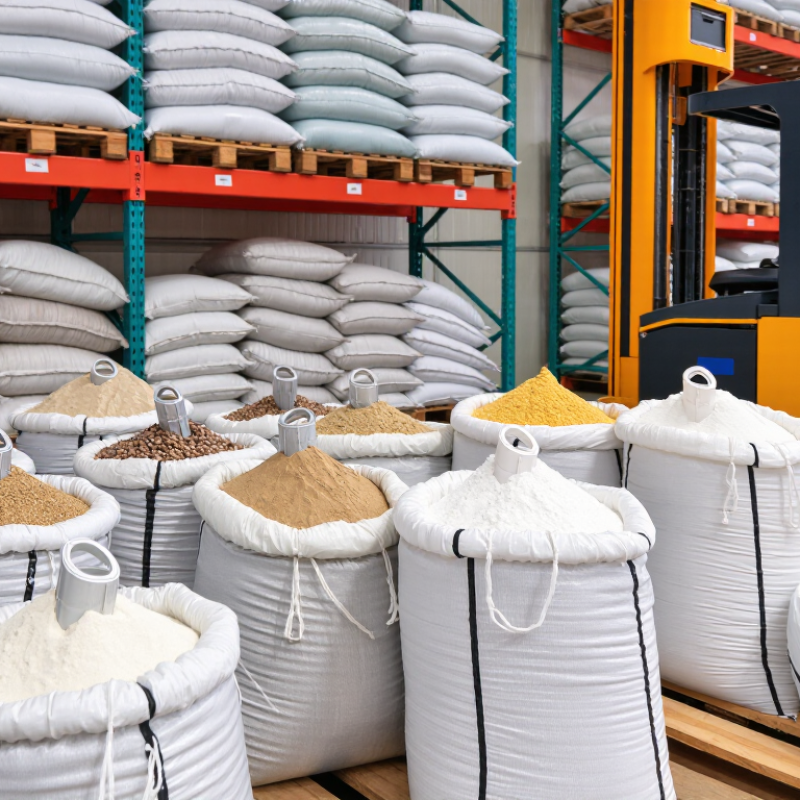
2026 Top Ton Bag Types What Is a Ton Bag Used For?

What Is a Ton Bag? Capacity Standards from 500 kg to 2,000 kg

A ton bag is a flexible intermediate bulk container, commonly called an FIBC. It carries dry, flowable materials such as grain, minerals, fertilizer, powders, and construction aggregates. Capacity is usually specified by payload, not the word “ton.” Standard options range from 500 kg to 2,000 kg, depending on fabric strength, dimensions, lifting loops, and filling conditions.

ISO 21898 defines performance requirements for FIBCs, including construction, testing, and safe working load. Many industrial bags use a 5:1 safety factor for single-trip service, while reusable designs may require 6:1 performance. The correct size also depends on bulk density. A 1,000 kg load of material with 1.4 tonnes per cubic metre needs roughly 0.71 cubic metres of internal space. Allow extra headroom.

Market demand supports this range. Grand View Research reported that the global FIBC market was valued at approximately USD 6.15 billion in 2023, with continued growth expected through 2030. Handling conditions still matter more than market forecasts. A 2,000 kg bag may suit dense minerals, but it can overload warehouse equipment or narrow pallets. I have seen specifications treated as fixed answers. They are not. Moisture, filling speed, discharge design, and forklift spacing can change the practical choice. Test the complete system, not only the bag.

2026 Top Ton Bag Types: What Is a Ton Bag Used For?

A ton bag, also called a flexible intermediate bulk container (FIBC) or bulk bag, is a woven polypropylene container designed to store and transport dry, flowable materials. Common rated capacities range from 500 kg to 2,000 kg, depending on the bag design, lifting system, filling method, and material density.

Typical Ton Bag Capacity Standards

Smaller 500–750 kg bags are useful where manual handling, limited storage space, or lower equipment capacity is required. The 1,000 kg size is widely used for general-purpose bulk handling, while 1,250–2,000 kg bags are selected for high-volume industrial transport when the handling equipment is appropriately rated.

How Are Ton Bags Classified Under ISO 21898 and Safety Factors of 5:1

2026 Top Ton Bag Types: What Is a Ton Bag Used For?

Ton bags, also called FIBCs, transport dry powders, granules, and bulk materials. Under ISO 21898, they are classified by construction, lifting design, filling method, discharge system, and intended handling conditions. Common designs include four-loop lifting bags, sleeve-lift bags, and bags with spouts or open tops. Each design should match the equipment, material, and warehouse routine.

A 5:1 safety factor means the bag’s specified breaking strength is at least five times its safe working load under controlled testing. For a 1,000 kg SWL bag, the target breaking load is approximately 5,000 kg. This is not permission to load 5,000 kg. Real risks include uneven filling, sharp edges, moisture, repeated lifting, and damaged loops. ISO 21898 compliance also depends on inspection, testing, marking, and traceable production records. In practice, the label matters. So does the condition of the bag.

Tips: Confirm the SWL, safety factor, bag type, and lifting method before use. Keep all four loops evenly supported. Do not drag a filled bag across concrete. Store empty bags away from sunlight and moisture. A careful operator should also question unclear labels, because small misunderstandings can become serious handling failures.

Which Ton Bag Types Fit Powder, Granule, and Hazardous Material Handling

In 2026, ton bags remain practical containers for powders and granules. Their flexible shape supports efficient filling, lifting, storage, and transport. Standard woven polypropylene bags suit many dry, free-flowing materials. Fine powders need tighter seams, dust-resistant construction, and often an internal liner. Granules usually require stronger fabric and reliable discharge openings. Static-sensitive powders may need antistatic or conductive designs after a professional risk assessment. Hazardous materials require more careful selection. Certified UN packaging, compatible liners, secure closures, clear labels, and approved transport procedures may be necessary. Not every hazardous substance belongs in a ton bag.

Tips: Match the bag to particle size, density, moisture, and flow behavior. Check the safe working load, lifting loops, and filling method. Ask for test documents before purchase. Small samples reveal problems early.

In practice, operators should inspect seams, liners, and lifting points before every use. A bag may look strong but still fail after moisture exposure or rough handling. Store filled bags on stable, dry surfaces, away from sharp edges and heat. Keep powder containers closed when dust control matters. For granules, confirm that the outlet opens smoothly without sudden release. I would not rely on appearance alone. A short trial with the actual material is wiser than a perfect specification sheet. Requirements can vary by substance, workplace, and destination, so trained safety personnel should verify the final design.

How Do U-Panel, Four-Panel, and Circular Bags Differ in Load Performance

Ton bags, also called flexible intermediate bulk containers, move dry goods in large quantities. Common contents include grain, mineral powder, resin pellets, and construction materials. For 2026 purchasing decisions, bag shape matters less than the complete handling system.

U-panel bags use one continuous body with two joined side panels. They usually offer a good balance between seam strength, stability, and economical production. With even filling, the body forms a stable square profile on a pallet. Uneven filling can twist the lifting loops. That detail is easy to miss.

Four-panel bags are sewn from four separate panels. Their flatter sides can improve stacking and reduce bulging during warehouse storage. However, more seams create more inspection points. In practice, seam quality and lifting-loop attachment can outweigh the panel count. Four-panel construction may perform better when the load needs a neat footprint.

Circular bags use a woven tubular body with fewer vertical seams. They often hold rounded loads smoothly and resist side bulging. Yet their shape may be less predictable with coarse, shifting material.

Load performance is not a shape contest. Check the safe working load, safety factor, fabric weight, coating, and test records from qualified suppliers. An experienced packer also checks discharge design and forklift clearance before ordering.

I would not select a bag from photographs alone. A small trial with the actual material can reveal settling, dust leakage, or loop strain. Those results may challenge the first choice, which is useful.

Where Are Ton Bags Used Across Construction, Agriculture, Chemicals, and Food Industries

Ton bags, also called flexible intermediate bulk containers, are practical for moving large volumes of dry materials. Their typical capacity ranges from 500 to 2,000 kilograms, depending on design and filling conditions. In construction, they carry sand, cement powders, gravel, mineral fillers, and controlled waste. The buildings and construction sector produced 37% of global energy and process-related carbon emissions in 2022, according to the United Nations Environment Programme. Reducing repeated handling can support cleaner site logistics, although packaging choices alone cannot solve construction waste.

Agriculture uses ton bags for seeds, animal feed, fertilizer, grain, and soil amendments. A lined bag helps limit moisture exposure during storage. However, humid warehouses can still damage contents. The Food and Agriculture Organization reports that global food loss remains substantial before retail, making protection during transport important. Operators should inspect seams, lifting loops, and pallets before loading. A small tear can spread quickly under heavy weight.

Chemical plants use ton bags for polymer granules, pigments, powders, and other permitted dry materials. Selection depends on electrostatic control, liner compatibility, discharge design, and regulatory requirements. Food processors use hygienic bags for flour, starch, sugar, rice, and powdered ingredients. The Global Food Safety Initiative emphasizes documented hygiene controls across food supply chains. Clean storage, traceability labels, and dedicated handling equipment matter. Reusable designs may reduce waste, but only when cleaning and inspection are genuinely reliable. That assumption needs testing.

2026 Top Ton Bag Types: What Is a Ton Bag Used For?

Ton Bag Type Typical Construction Typical Safe Working Load Common Materials Handled Main Industries Key Features and Uses
Standard U-Panel FIBC Woven polypropylene body made from a continuous U-shaped panel with two additional side panels. Commonly 500–2,000 kg, depending on design and certification. Sand, gravel, cement, minerals, grains, seeds, powders and plastic pellets. Construction, agriculture, mining, chemicals and manufacturing. A versatile general-purpose option for dry, free-flowing bulk materials. Lifting loops support forklift or crane handling.
Four-Panel FIBC Four separately sewn woven polypropylene panels form a square or rectangular body. Commonly 500–2,000 kg, subject to testing and the selected safety factor. Fertilizer, agricultural products, powders, mineral products and construction aggregates. Agriculture, construction, chemicals and industrial processing. Maintains a stable shape when filled and can make efficient use of warehouse and transport space.
Circular FIBC Tubular woven polypropylene fabric forms the main body, reducing the number of vertical seams. Often 500–2,000 kg, with the actual rating determined by the tested bag design. Fine powders, resins, pigments, grains and other dry bulk products. Chemicals, food processing, agriculture and general manufacturing. Fewer seams can help reduce leakage paths. A liner may be added when moisture or fine-powder containment is required.
Baffle FIBC Internal fabric baffles connect the side panels and help the bag retain a square shape after filling. Commonly 500–2,000 kg, depending on dimensions, fabric and test results. Powders, grains, food ingredients, chemicals and pharmaceutical raw materials. Food, chemicals, agriculture, pharmaceuticals and logistics. Provides high cubic efficiency and improved stacking stability compared with many conventional bulk bags.
Linered FIBC Woven polypropylene outer bag fitted with a polyethylene or polypropylene inner liner. Typically 500–2,000 kg, based on the outer bag’s certified design. Fine powders, hygroscopic products, food ingredients, fertilizers and chemicals. Food, chemicals, agriculture, construction materials and pharmaceuticals. The liner improves containment and helps protect contents from moisture, dust and contamination; it does not make the bag waterproof unless specifically designed and sealed.
Food-Contact FIBC Manufactured from suitable clean materials under controlled production and handling conditions; may include an inner liner. Often 500–2,000 kg, subject to the product specification and certification. Flour, sugar, rice, starch, cocoa, animal feed and other dry food ingredients. Food processing, agriculture and ingredient distribution. Designed for hygienic bulk handling. Food-contact suitability, cleanliness and traceability should be verified for the intended market.
Type C Conductive FIBC Constructed with conductive threads or filaments that must be connected to an approved ground during filling and discharge. Commonly 500–2,000 kg, subject to the certified bag design. Flammable powders, solvents, resins, pigments and combustible chemical materials. Chemicals, plastics, coatings, pharmaceuticals and hazardous-material processing. Provides a controlled path for dissipating static electricity only when correctly grounded and used within a suitable risk-control system.
Type D Static-Dissipative FIBC Uses specially engineered fabric to dissipate static charges without a separate grounding connection. Commonly 500–2,000 kg, according to the tested specification. Combustible powders and flammable materials handled in controlled industrial environments. Chemicals, pharmaceuticals, plastics and specialty manufacturing. Can be selected where grounding a bag is impractical, but performance depends on the certified fabric, environment and correct handling procedures.
UN-Certified FIBC A bulk bag tested and marked for specified dangerous goods under applicable UN packaging requirements. The certified rating varies by design; the UN marking and packaging instruction must be checked before use. Certain hazardous powders, granules and solid chemicals permitted for flexible intermediate bulk packaging. Chemical manufacturing, mining, agriculture and regulated transport. Used when the product, filling method, closure system and transport conditions meet the applicable dangerous-goods requirements.
Ventilated FIBC Includes woven ventilation strips or breathable sections to improve airflow through the bag. Often 500–1,500 kg, depending on the product and construction. Firewood, logs, agricultural produce, potatoes, onions and other products requiring ventilation. Agriculture, forestry, horticulture and biomass handling. Helps reduce heat and moisture accumulation during storage or transport; it is not intended for fine powders or moisture-sensitive materials.

Note: A ton bag, also called an FIBC or bulk bag, is a flexible container for transporting and storing dry bulk materials. The actual safe working load, reuse status, dimensions and handling method must always be confirmed from the bag’s label, test certificate and operating instructions.

FAQS

How do U-panel bags perform under heavy loads?

U-panel bags balance seam strength, stability, and production cost. Even filling creates a stable square shape on a pallet. Uneven filling may twist the lifting loops. That detail matters.

When are four-panel bags a practical choice?

Four-panel bags have flatter sides and often stack neatly in warehouses. Their shape can reduce bulging during storage. More seams create more inspection points, however. Seam quality still matters more than panel count.

What are the main features of circular bags?

Circular bags use a woven tubular body with fewer vertical seams. They hold rounded materials smoothly and resist side bulging. Coarse materials may shift and create an unpredictable shape. Not always better.

Does bag shape determine load performance?

Not by itself. Check the safe working load, safety factor, fabric weight, coating, and test records. Lifting-loop attachment is crucial. A photograph cannot show everything.

What materials commonly use ton bags?

Construction sites use them for sand, mineral powders, gravel, and cement powders. Farms use them for grain, seeds, feed, fertilizer, and soil amendments. Processing facilities may handle flour, starch, sugar, and rice. Materials must be suitable and permitted.

How should operators prepare ton bags before loading?

Inspect seams, lifting loops, and pallets before filling. Confirm forklift clearance and discharge design. Keep the bag centered during lifting. Small tears can spread quickly under heavy weight.

How can moisture affect stored materials?

A liner can reduce moisture exposure during storage. It cannot protect contents in every humid warehouse. Use dry storage with clean pallets and covered loading areas. That assumption needs testing.

What should food-related users check?

Use hygienic bags with traceability labels and documented cleaning controls. Keep them away from dust, chemicals, and damaged packaging. Dedicated handling equipment reduces contamination risks. Reuse sounds efficient, but cleaning must be genuinely reliable.

Is a small trial useful before purchasing?

Yes. Test the actual material in a representative bag. Observe settling, dust leakage, loop strain, and discharge behavior. The trial may challenge the original choice. That is useful.

Conclusion

A ton bag is a flexible bulk container designed to store and transport large quantities of materials, typically from 500 kg to 2,000 kg, depending on its construction and rated capacity. Under ISO 21898, ton bags are classified according to factors such as design, lifting methods, working load limits, and safety ratios, with a common 5:1 safety factor supporting reliable handling when used correctly. Different designs suit different applications: U-panel bags offer balanced strength, four-panel bags provide stable shape and stacking performance, while circular bags are efficient for many powders and granular products.

What is a ton bag used for? These containers are widely used for construction materials, agricultural products, chemical powders, food ingredients, and other bulk goods. Specialized designs can support fine powders, granules, moisture-sensitive contents, or properly regulated hazardous materials, provided that suitable liners, closures, labeling, inspection, and handling procedures are applied. Selecting the right fabric, discharge system, lifting configuration, and load rating helps improve safety, storage efficiency, and transportation performance.

Isabella

Isabella

Isabella is a dedicated marketing professional with a sharp focus on driving brand growth and engagement through strategic content creation. With an extensive background in digital marketing, she combines her passion for storytelling with her keen understanding of industry trends to deliver......